
How to Become a Medical Coder in India (2026 Complete Guide)
Learning how to become a medical coder in India is one of the most practical career moves for life sciences, pharmacy, and nursing graduates seeking stable remote-friendly work. This guide walks through eligibility, training, AAPC CPC certification, job search, and salary expectations — without shortcuts that fail in real RCM hiring.
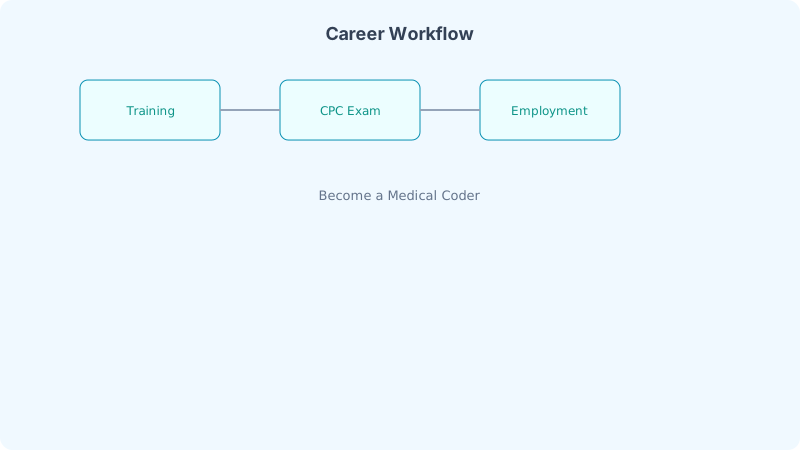
TL;DR: Graduate → CPC-focused training → timed mock exams → AAPC CPC exam → apply to RCM/remote employers. Timeline: typically 6–9 months for career switchers.
Start your medical coding career with expert guidance.
Medical Coding Career Overview
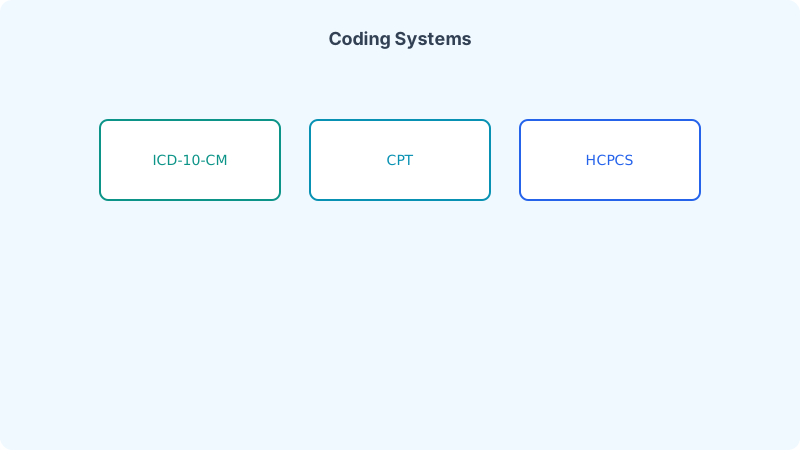
Medical coding translates clinical documentation into ICD-10-CM, CPT, and HCPCS codes for claims and compliance. AAPC CPC certification is the standard credential for outpatient physician coding careers in India and globally.
India's healthcare BPO sector hires thousands of coders annually. Employers filter for CPC certification and production-ready chart skills.
When evaluating medical coding career overview, connect theory to hiring outcomes: India RCM employers hire for production readiness, not course completion alone. Document your learning milestones — mock scores, practicum charts coded, guideline notes — so interviews demonstrate skill beyond certificates.
Practical application matters: after studying this topic, code at least five practise charts that touch the same concepts, then review errors with a CPC-certified mentor. Pattern recognition from repetition beats re-reading the same notes without coding under light time pressure.
Employers rarely ask textbook definitions alone. They want to hear how you applied ICD-10-CM guidelines on a confusing chart, why you chose a specific E&M level, and how you would query a physician when documentation is incomplete. Build that narrative while training — not after rejection emails.
For personalized guidance on how to become a medical coder in India, attend a free demo session with QuickCode Solutions trainers who grade charts daily and align teaching with current AAPC exam patterns.
Eligibility to Become a Medical Coder
- Bachelor's degree (any discipline; life sciences advantageous)
- English proficiency and computer literacy
- No clinical license required for US outpatient coding roles
When evaluating eligibility to become a medical coder, connect theory to hiring outcomes: India RCM employers hire for production readiness, not course completion alone. Document your learning milestones — mock scores, practicum charts coded, guideline notes — so interviews demonstrate skill beyond certificates.
Practical application matters: after studying this topic, code at least five practise charts that touch the same concepts, then review errors with a CPC-certified mentor. Pattern recognition from repetition beats re-reading the same notes without coding under light time pressure.
Employers rarely ask textbook definitions alone. They want to hear how you applied ICD-10-CM guidelines on a confusing chart, why you chose a specific E&M level, and how you would query a physician when documentation is incomplete. Build that narrative while training — not after rejection emails.
For personalized guidance on how to become a medical coder in India, attend a free demo session with QuickCode Solutions trainers who grade charts daily and align teaching with current AAPC exam patterns.
7-Step Roadmap to Become a Medical Coder
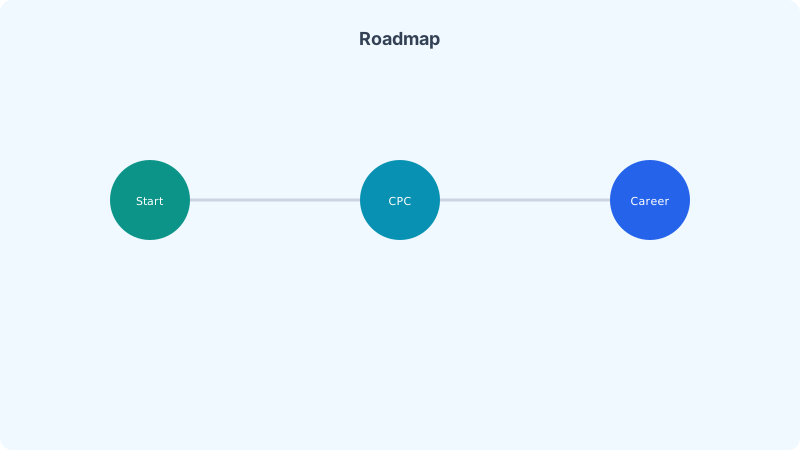
- Research career fit and shift expectations
- Enroll in CPC-focused medical coding training
- Master ICD-10-CM, CPT, HCPCS with chart practicum
- Pass timed mock exams consistently
- Register and pass AAPC CPC exam
- Optimize resume and LinkedIn
- Apply to RCM firms and remote employers
When evaluating 7-step roadmap to become a medical coder, connect theory to hiring outcomes: India RCM employers hire for production readiness, not course completion alone. Document your learning milestones — mock scores, practicum charts coded, guideline notes — so interviews demonstrate skill beyond certificates.
Practical application matters: after studying this topic, code at least five practise charts that touch the same concepts, then review errors with a CPC-certified mentor. Pattern recognition from repetition beats re-reading the same notes without coding under light time pressure.
Employers rarely ask textbook definitions alone. They want to hear how you applied ICD-10-CM guidelines on a confusing chart, why you chose a specific E&M level, and how you would query a physician when documentation is incomplete. Build that narrative while training — not after rejection emails.
For personalized guidance on how to become a medical coder in India, attend a free demo session with QuickCode Solutions trainers who grade charts daily and align teaching with current AAPC exam patterns.
How to Choose Medical Coding Training
Prioritize CPC-certified trainers, real charts, weekly timed mocks, and transparent placement support. Avoid programs teaching only Indian hospital billing.
When evaluating how to choose medical coding training, connect theory to hiring outcomes: India RCM employers hire for production readiness, not course completion alone. Document your learning milestones — mock scores, practicum charts coded, guideline notes — so interviews demonstrate skill beyond certificates.
Practical application matters: after studying this topic, code at least five practise charts that touch the same concepts, then review errors with a CPC-certified mentor. Pattern recognition from repetition beats re-reading the same notes without coding under light time pressure.
Employers rarely ask textbook definitions alone. They want to hear how you applied ICD-10-CM guidelines on a confusing chart, why you chose a specific E&M level, and how you would query a physician when documentation is incomplete. Build that narrative while training — not after rejection emails.
For personalized guidance on how to become a medical coder in India, attend a free demo session with QuickCode Solutions trainers who grade charts daily and align teaching with current AAPC exam patterns.
CPC Certification Path
Join AAPC, complete training, schedule exam when mocks exceed 75%. See our CPC certification training program.
When evaluating cpc certification path, connect theory to hiring outcomes: India RCM employers hire for production readiness, not course completion alone. Document your learning milestones — mock scores, practicum charts coded, guideline notes — so interviews demonstrate skill beyond certificates.
Practical application matters: after studying this topic, code at least five practise charts that touch the same concepts, then review errors with a CPC-certified mentor. Pattern recognition from repetition beats re-reading the same notes without coding under light time pressure.
Employers rarely ask textbook definitions alone. They want to hear how you applied ICD-10-CM guidelines on a confusing chart, why you chose a specific E&M level, and how you would query a physician when documentation is incomplete. Build that narrative while training — not after rejection emails.
For personalized guidance on how to become a medical coder in India, attend a free demo session with QuickCode Solutions trainers who grade charts daily and align teaching with current AAPC exam patterns.
Skills Employers Expect
- ICD-10-CM guideline application
- CPT E&M level selection
- Chart reading speed and accuracy
- US shift flexibility for client-facing roles
When evaluating skills employers expect, connect theory to hiring outcomes: India RCM employers hire for production readiness, not course completion alone. Document your learning milestones — mock scores, practicum charts coded, guideline notes — so interviews demonstrate skill beyond certificates.
Practical application matters: after studying this topic, code at least five practise charts that touch the same concepts, then review errors with a CPC-certified mentor. Pattern recognition from repetition beats re-reading the same notes without coding under light time pressure.
Employers rarely ask textbook definitions alone. They want to hear how you applied ICD-10-CM guidelines on a confusing chart, why you chose a specific E&M level, and how you would query a physician when documentation is incomplete. Build that narrative while training — not after rejection emails.
For personalized guidance on how to become a medical coder in India, attend a free demo session with QuickCode Solutions trainers who grade charts daily and align teaching with current AAPC exam patterns.
How to Find Medical Coding Jobs in India
Use LinkedIn, Naukri, and institute placement cells. Target RCM companies; highlight CPC or CPC-A status clearly.
When evaluating how to find medical coding jobs in india, connect theory to hiring outcomes: India RCM employers hire for production readiness, not course completion alone. Document your learning milestones — mock scores, practicum charts coded, guideline notes — so interviews demonstrate skill beyond certificates.
Practical application matters: after studying this topic, code at least five practise charts that touch the same concepts, then review errors with a CPC-certified mentor. Pattern recognition from repetition beats re-reading the same notes without coding under light time pressure.
Employers rarely ask textbook definitions alone. They want to hear how you applied ICD-10-CM guidelines on a confusing chart, why you chose a specific E&M level, and how you would query a physician when documentation is incomplete. Build that narrative while training — not after rejection emails.
For personalized guidance on how to become a medical coder in India, attend a free demo session with QuickCode Solutions trainers who grade charts daily and align teaching with current AAPC exam patterns.
Salary Expectations for New Medical Coders
Fresh CPC-certified coders in India often start ₹18,000–₹28,000/month plus allowances. See medical coding salary for freshers.
When evaluating salary expectations for new medical coders, connect theory to hiring outcomes: India RCM employers hire for production readiness, not course completion alone. Document your learning milestones — mock scores, practicum charts coded, guideline notes — so interviews demonstrate skill beyond certificates.
Practical application matters: after studying this topic, code at least five practise charts that touch the same concepts, then review errors with a CPC-certified mentor. Pattern recognition from repetition beats re-reading the same notes without coding under light time pressure.
Employers rarely ask textbook definitions alone. They want to hear how you applied ICD-10-CM guidelines on a confusing chart, why you chose a specific E&M level, and how you would query a physician when documentation is incomplete. Build that narrative while training — not after rejection emails.
For personalized guidance on how to become a medical coder in India, attend a free demo session with QuickCode Solutions trainers who grade charts daily and align teaching with current AAPC exam patterns.
Common Mistakes Beginners Make
- Skipping certification
- Choosing recorded-only courses
- Delaying mock exams
- Ignoring anatomy and terminology
When evaluating common mistakes beginners make, connect theory to hiring outcomes: India RCM employers hire for production readiness, not course completion alone. Document your learning milestones — mock scores, practicum charts coded, guideline notes — so interviews demonstrate skill beyond certificates.
Practical application matters: after studying this topic, code at least five practise charts that touch the same concepts, then review errors with a CPC-certified mentor. Pattern recognition from repetition beats re-reading the same notes without coding under light time pressure.
Employers rarely ask textbook definitions alone. They want to hear how you applied ICD-10-CM guidelines on a confusing chart, why you chose a specific E&M level, and how you would query a physician when documentation is incomplete. Build that narrative while training — not after rejection emails.
For personalized guidance on how to become a medical coder in India, attend a free demo session with QuickCode Solutions trainers who grade charts daily and align teaching with current AAPC exam patterns.
Medical Coding Job Market in India (2026)
India's healthcare revenue cycle management (RCM) sector processes millions of US outpatient claims annually. Hyderabad, Bangalore, Chennai, Pune, and Noida host large RCM employers that hire coders for physician practices, ambulatory surgery centers, and specialty clinics. The hiring filter is consistent: CPC certification or strong CPC-A status, chart accuracy on employer assessments, and willingness to work US-aligned shifts when required.
Unlike Indian hospital billing (which uses local tariff and insurance norms), US outpatient coding follows AAPC and CMS guidelines. Training institutes that teach only Indian billing without ICD-10-CM, CPT, and HCPCS depth leave graduates unprepared for the roles that pay sustainably. This is why career switchers should prioritize CPC-aligned programs with real chart practicum — whether classroom in Ameerpet or live online from any Indian city.
The RCM job market in 2026 remains active for certified coders because US provider documentation volume continues to grow, denials management requires human judgment, and computer-assisted coding still needs certified reviewers. Candidates who combine CPC credentials with consistent mock exam performance and professional communication skills access remote roles from tier-2 cities as easily as metro graduates.
Career switchers from pharmacy, nursing, microbiology, and biotechnology often enter coding because clinical vocabulary accelerates terminology learning. Arts and commerce graduates succeed equally when they invest extra time in anatomy and medical language during the first eight weeks of training.
Remote work expanded hiring geography: a CPC-certified coder in Vijayawada, Coimbatore, Calicut, or tier-3 towns can work for Hyderabad or Bangalore RCM employers without relocating. Employers evaluate production metrics — accuracy percentage, charts per hour after ramp-up, and audit scores — within the first 90 days of employment.
A Day in the Life of a Medical Coder
Typical outpatient coding shifts begin with queue review: assigned charts from the previous day's clinic visits. Coders open electronic health records, verify documentation supports reported services, assign ICD-10-CM and CPT codes, apply modifiers when documentation warrants, and route incomplete charts to physicians via query workflows.
Mid-shift may include team huddles on payer policy updates or coding clinic feedback from auditors. Senior coders handle complex surgical cases or specialty denials. Accuracy targets often exceed 95% on first-pass coding; repeated errors trigger retraining.
US-aligned shifts (evening/night IST) are common for direct client-facing roles. Domestic process roles may offer day shifts. Clarify shift expectations during interviews and factor night allowances into salary comparisons.
Coding Systems Every Beginner Studies
ICD-10-CM, CPT, and HCPCS — What Every Coder Must Know
ICD-10-CM codes describe diagnoses and reasons for encounter. Coders apply official guidelines — including laterality, combination codes, and manifestation rules — that require human interpretation beyond keyword matching.
CPT codes describe procedures and evaluation & management (E&M) services. Selecting the correct E&M level from documentation elements (history, exam, medical decision-making) is a core CPC exam skill and daily production task.
HCPCS Level II covers supplies, drugs, and ancillary services. Outpatient coders encounter HCPCS when coding injectables, DME, and certain preventive services.
| Code set | Primary use | CPC exam weight |
|---|---|---|
| ICD-10-CM | Diagnoses | High |
| CPT | Procedures & E&M | Very high |
| HCPCS | Supplies & ancillary | Moderate |
Study Plan From Enrollment to First Job
Sample Weekly Study Plan (During CPC Training)
| Day | Focus | Hours |
|---|---|---|
| Monday | Live class + terminology review | 2–3 |
| Tuesday | ICD-10-CM guideline drills | 2 |
| Wednesday | Live class + CPT E&M scenarios | 2–3 |
| Thursday | Chart practicum (assigned cases) | 2 |
| Friday | Live class + HCPCS review | 2–3 |
| Saturday | Timed mock section or full mock | 3–4 |
| Sunday | Weak-area revision + anatomy | 1–2 |
Consistency beats cramming. Students who maintain this rhythm for 16–20 weeks typically reach mock scores that justify scheduling the AAPC CPC exam. See our CPC exam calendar guide for readiness signals — not arbitrary test dates.
Month-by-Month Milestones
- Months 1–2: Terminology, anatomy, introduction to ICD-10-CM
- Months 3–4: CPT modules, E&M leveling, HCPCS basics
- Month 5: Full-length timed mocks, weak-area remediation
- Month 6: AAPC CPC exam, resume preparation, interviews
Best Academic Backgrounds for Medical Coding
| Background | Advantage | Watch-out |
|---|---|---|
| Pharmacy / Nursing | Clinical vocabulary | US coding rules differ from clinical practice |
| Life sciences B.Sc | Anatomy familiarity | Still need CPT depth |
| Arts / Commerce | Strong communication | Extra terminology study time |
| IT / Engineering | Systems comfort | Medical language learning curve |
Glossary
- RCM (Revenue Cycle Management)
- End-to-end process from patient registration through claim submission, payment, and denial resolution.
- CPC (Certified Professional Coder)
- AAPC credential for outpatient physician coding.
- CPC-A
- Apprentice CPC status until experience requirements are fulfilled.
- E&M
- Evaluation and Management — office visit coding by documentation level.
- CEU
- Continuing education units required for AAPC credential maintenance.
- CAC
- Computer-assisted coding — AI-suggested codes reviewed by certified coders.
- Denial
- Payer rejection or downcoding requiring appeal or corrected claim.
- Modifier
- Two-character CPT add-on clarifying service circumstances.
Employer Coding Assessments: What to Expect
RCM hiring in India almost always includes a practical coding test before HR rounds. Assessments typically provide 2–10 de-identified charts or scenario-based multiple-choice items under time pressure. Employers measure ICD-10-CM specificity, CPT accuracy (especially E&M), modifier use, and whether you code only documented services.
Common failure patterns: overcoding E&M levels, missing laterality on injury codes, assigning procedure codes without supporting documentation, and ignoring official guideline sequencing rules. Training programs that skip timed chart sets leave graduates surprised by assessment difficulty.
How to Prepare for Hiring Tests
- Complete weekly timed mocks during training — not only open-book homework
- Review every wrong answer with guideline citation
- Practice explaining code choices aloud (auditors ask "why this code?")
- Simulate 45–60 minute assessment blocks weekly in final training month
- Bring CPC or CPC-A status to the interview — many firms filter before testing
QuickCode placement support includes employer-style assessment practice before referrals. Accuracy above employer thresholds matters more than institute completion certificates alone.
E&M Coding: The Skill That Defines CPC Careers
Evaluation and Management (E&M) coding represents a large share of outpatient volume and CPC exam questions. Coders determine visit level from documented history, examination, and medical decision-making (MDM) — or time when time-based coding criteria are met under current guidelines.
Beginners often overcook levels because documentation mentions many problems without supporting MDM complexity. Expert coders distinguish chronic stable conditions from actively managed problems and recognize when physician queries are required instead of guessing.
| Documentation element | Common beginner error | Expert approach |
|---|---|---|
| History | Assuming comprehensive without detail | Verify required elements per level |
| Exam | Counting unrelated bullet points | Match exam type to documented systems |
| MDM | Ignoring risk and data reviewed | Apply 2021+ MDM tables correctly |
| Time | Using time when not documented | Code time only with explicit total |
Mastering E&M separates candidates who pass employer assessments from those who stall in trainee limbo. Dedicated E&M drills should continue through your first production month.
Interview Preparation for Medical Coding Roles
Technical rounds test coding; HR rounds test shift flexibility, communication, and retention risk. Prepare concise answers for: why medical coding, why you left prior field, US shift acceptance, expected salary range, and certification timeline.
Resume Essentials
- Lead with CPC or CPC-A status near your name block
- Quantify mock exam scores if strong (e.g., "consistent 85%+ on timed CPC mocks")
- List chart practicum volume if substantial
- Include LinkedIn URL aligned with resume
- Remove unrelated hobbies unless they demonstrate reliability
Questions to Ask Employers
- What accuracy and productivity targets apply in first 90 days?
- Is training paid during ramp-up?
- What shift and weekend requirements exist?
- How are CEUs supported for credential maintenance?
- Is remote work permanent or temporary?
Medical Coding Career Myths vs Facts
| Myth | Fact |
|---|---|
| "Anyone can code without certification" | Major RCM firms require CPC or rigorous assessment |
| "Recorded videos are enough" | Timed mocks and mentor feedback drive pass rates |
| "Only science graduates succeed" | Non-science grads succeed with terminology discipline |
| "AI eliminated coding jobs" | Demand shifts toward review, audit, and complex cases |
| "Placement guarantee = guaranteed job" | Read conditions; performance still required |
| "Indian hospital billing equals US coding" | Different code sets, guidelines, and payers |
Career decisions based on myths waste months. Validate claims with alumni, LinkedIn job postings, and AAPC exam statistics before enrolling anywhere.
Denials, Compliance, and Coder Accountability
Coders influence claim outcomes but share compliance responsibility with providers and billers. Upcoding, unbundling, or assigning codes without documentation triggers payer audits, False Claims Act exposure (for US entities), and employer termination.
Denials occur when payers disagree with code selection, lack prior authorization, or identify missing documentation. Coders may participate in appeals by supplying guideline citations and chart highlights. Understanding denial root causes makes you valuable beyond first-pass coding speed.
Ethical coding — assigning only what is supported — protects your credential and career long-term. Institutes should teach compliance alongside speed; if ethics is absent from curriculum, treat that as a red flag.
Key Takeaways
- CPC certification is the primary hiring filter for India RCM outpatient roles
- Live training with chart practicum and timed mocks outperforms passive video courses
- Salary grows with certification, accuracy, specialty exposure, and experience — not shortcuts
- Remote work expands opportunity geography but not performance standards
- AI changes workflows; certified human judgment remains essential
- Choose training with transparent placement assistance, not vague guarantees
Book a free demo class at QuickCode Solutions to map your personal timeline from enrollment through CPC certification and employment.
Medical Terminology and Anatomy for Coders
Coding accuracy depends on reading clinical documentation fluently. Medical terms combine prefixes (e.g., hyper-, hypo-), root words (cardi = heart), and suffixes (-itis = inflammation). Building vocabulary early accelerates ICD-10-CM index navigation and reduces exam time wasted decoding terms.
Anatomy knowledge helps coders recognize organ systems in operative reports and imaging studies. You do not need clinical licensure — you need functional literacy: knowing that cholecystectomy is gallbladder removal helps you verify CPT code families quickly.
High-Yield Systems for CPC Beginners
- Musculoskeletal: fracture laterality, joint replacements, common ortho procedures
- Cardiovascular: hypertension combinations, CABG documentation basics
- Digestive: endoscopy levels, common GI complaints
- Respiratory: COPD combinations, acute vs chronic presentations
- Integumentary: lesion excision sizing and closure documentation
Daily flashcard discipline — 15 minutes before class — compounds dramatically over 12 weeks. Pair terminology with chart practicum so words appear in real sentences, not isolation.
CPC Exam Question Types and Strategy
CPC items cluster around: ICD-10-CM guideline application, CPT procedure selection, E&M level determination, HCPCS supplies, compliance/ethics, and anatomy/medical terminology. Open-book format rewards manual tabbing skill — students should practice with the same manuals allowed on test day.
Time Management on Exam Day
- First pass: answer confident questions; flag uncertain items
- Second pass: guideline lookups for flagged ICD items
- Third pass: CPT and E&M scenarios with manual cross-check
- Reserve final 15 minutes for unanswered items — never leave blanks
Mock exams should replicate 4-hour blocks with only approved resources. Institutes reporting high pass rates track mock trajectories — schedule the real exam when full mocks stabilize above your target buffer (often 75–80%+).
Review AAPC policies for online proctoring if testing from India. Ensure stable internet, quiet room, and government ID ready — logistics failures cause unnecessary rescheduling fees.
Remote Coding Productivity and Ergonomics
Remote medical coding from India requires professional home setup: ergonomic chair, proper monitor height, wired internet backup, and UPS for power cuts. Employers monitor login adherence and productivity — treat WFH as on-site regarding punctuality.
Productivity metrics typically ramp: week 1–4 training queues, week 5–12 supervised production with lower chart targets, month 4+ full quotas. New coders who maintain 95%+ accuracy during ramp outperform those chasing speed prematurely.
WFH Best Practices
- Dedicated workspace separate from household distractions
- Headset for team calls and query discussions
- Version-controlled personal notes on recurring payer quirks
- Scheduled breaks to reduce fatigue errors on afternoon charts
- Secure device policy — PHI handling rules apply even at home
Remote does not mean isolated. Top performers participate in team channels, ask guideline questions early, and attend continuing education sessions employers provide.
Outpatient Specialties Overview for New Coders
After certification, coders often land on teams focused on family practice, gastroenterology, orthopedics, cardiology, or multispecialty groups. Each specialty has documentation patterns: GI relies on endoscopy reports; ortho on fracture care and injections; cardiology on echo and stress test documentation.
Generalist CPC holders are employable broadly; specialty exposure during practicum or first job improves speed. Some employers rotate new hires across specialties before assignment — treat rotation as learning, not punishment.
| Specialty | Documentation focus | Beginner difficulty |
|---|---|---|
| Family practice | E&M, chronic care | Moderate |
| Radiology | Professional/technical components | Moderate |
| GI | Endoscopy levels | Moderate-high |
| Orthopedics | Fracture care, injections, surgery | High |
| Cardiology | Diagnostic tests, procedures | High |
Long-term career growth may include specialty AAPC credentials — pursue after 18–24 months stable production experience.
Continuing Education and Career Longevity
AAPC-certified coders must complete continuing education units (CEUs) each renewal cycle to maintain CPC status. CEUs keep you current with annual ICD-10-CM and CPT updates released each October — missing updates causes production errors and failed audits.
Beyond compliance, CEUs signal career seriousness to employers considering promotions to senior coder, auditor, or team lead. Many employers subsidize AAPC membership and conference attendance for top performers.
Career Ladder After Fresher Role
- Months 0–12: Production coder — accuracy and speed focus
- Years 1–3: Senior coder or specialty pod — complex charts
- Years 3–5: Coding auditor or QA lead — sample review, training juniors
- Years 5+: Coding manager, compliance analyst, or remote team lead
Each step assumes maintained certification, clean audit history, and increasingly clear written communication — skills QuickCode emphasizes from week one of training.
Why Students Choose QuickCode Solutions
QuickCode Solutions trains from Ameerpet, Hyderabad — a medical coding hub — with the same curriculum delivered live online across India. Differentiators that matter for outcomes:
- CPC-certified trainers actively grading student charts and mocks
- Real outpatient practicum across E&M, radiology, surgery, and GI scenarios
- Weekly timed mock exams with score tracking toward AAPC readiness
- Placement assistance with resume, mock interviews, and employer referrals — transparent terms
- Metro-accessible campus beside Aditya Trade Centre for local students
Compare institutes using our city guides: Hyderabad, Ameerpet, and Bangalore. Then book a demo and judge teaching quality firsthand.
Related guides: Certified Medical Coder · Salary Guide · Hyderabad Institutes
Ready to take the next step?
People Also Ask: Become a Medical Coder
Quick answers about how to become a medical coder in India. See full FAQs.
How long does it take to become a medical coder in India — quick answer?
Typically 6 to 9 months including training and CPC exam preparation.
Can I become a medical coder without a science degree — quick answer?
Yes.
Is medical coding a good career in India in 2026 — quick answer?
Yes for candidates who complete CPC certification and target RCM or remote US healthcare employers.
What is the becoming a medical coder — quick answer?
The becoming a medical coder refers to how and when candidates can schedule the AAPC Certified Professional Coder (CPC) certification career.
How do I check the latest CPC career dates — quick answer?
Log in to your AAPC member account at aapc.
How often is the CPC career conducted — quick answer?
The CPC career is available year-round through online proctored testing for most candidates.
Can I take the CPC career online — quick answer?
Yes.
How do I register for the CPC career — quick answer?
First join AAPC as a member, then purchase the CPC career voucher through your member account.
How long should I study before the CPC career — quick answer?
Most successful candidates study 3 to 6 months with structured training covering ICD-10-CM, CPT, HCPCS, anatomy, and medical terminology.
What is the CPC career pattern — quick answer?
The CPC career is a timed, open-book test with 100 multiple-choice questions covering diagnosis coding, procedure coding, compliance, and medical terminology.
What is the passing score for the CPC career — quick answer?
AAPC sets the passing score for the CPC career based on psychometric analysis — historically around 70% correct answers, but the exact threshold can vary by career form.
What are CPC career fees — quick answer?
CPC career fees include AAPC membership and the career voucher.
What is the eligibility for the CPC career — quick answer?
AAPC does not require a specific degree for CPC career eligibility, though employers often prefer graduates with healthcare or life sciences backgrounds.
How many times can I attempt the CPC career — quick answer?
If you do not pass, you may retake the CPC career by purchasing a new career voucher.
What happens after passing the CPC career — quick answer?
You receive CPC or CPC-A credential status depending on experience requirements.
What is CPC-A versus CPC — quick answer?
CPC-A (Apprentice) is awarded to candidates who pass the career but have not yet met AAPC's experience requirement.
Do I need AAPC membership before booking the career — quick answer?
Yes.
What documents do I need on CPC career day — quick answer?
Bring government-issued photo ID matching your AAPC registration name.
How long is the CPC career — quick answer?
The CPC career allows approximately 4 hours for 100 questions under current AAPC format.
Is the CPC career open book — quick answer?
Yes.
What books do I need for the CPC career — quick answer?
You need current-year ICD-10-CM, CPT, and HCPCS Level II code books from official publishers.
What is on the CPC career syllabus — quick answer?
The syllabus covers ICD-10-CM diagnosis coding, CPT procedure coding, HCPCS Level II, compliance, anatomy, medical terminology, and guideline application.
How do I create a personal CPC study calendar — quick answer?
Start from your target career window (not a fixed date).
What is a good 30-day CPC study plan — quick answer?
A 30-day plan suits candidates who already completed foundation training.
What is a good 60-day CPC study plan — quick answer?
Days 1–20: ICD-10-CM chapters with end-of-chapter quizzes.
How long does it take to become a medical coder in India?
Typically 6 to 9 months including training and CPC exam preparation. Science graduates may progress faster with dedicated study.
Can I become a medical coder without a science degree?
Yes. Many arts and commerce graduates succeed with strong terminology study and quality CPC training.
Is medical coding a good career in India in 2026?
Yes for candidates who complete CPC certification and target RCM or remote US healthcare employers.
How long does it take to become a medical coder in India?
Typically 6 to 9 months including training and CPC exam preparation. Science graduates may progress faster with dedicated study.
Can I become a medical coder without a science degree?
Yes. Many arts and commerce graduates succeed with strong terminology study and quality CPC training.
Is medical coding a good career in India in 2026?
Yes for candidates who complete CPC certification and target RCM or remote US healthcare employers.
How long does it take to become a medical coder in India?
Typically 6 to 9 months including training and CPC exam preparation. Science graduates may progress faster with dedicated study.
Can I become a medical coder without a science degree?
Yes. Many arts and commerce graduates succeed with strong terminology study and quality CPC training.
Is medical coding a good career in India in 2026?
Yes for candidates who complete CPC certification and target RCM or remote US healthcare employers.
How long does it take to become a medical coder in India?
Typically 6 to 9 months including training and CPC exam preparation. Science graduates may progress faster with dedicated study.
Can I become a medical coder without a science degree?
Yes. Many arts and commerce graduates succeed with strong terminology study and quality CPC training.
Is medical coding a good career in India in 2026?
Yes for candidates who complete CPC certification and target RCM or remote US healthcare employers.
How long does it take to become a medical coder in India?
Typically 6 to 9 months including training and CPC exam preparation. Science graduates may progress faster with dedicated study.
Can I become a medical coder without a science degree?
Yes. Many arts and commerce graduates succeed with strong terminology study and quality CPC training.
Is medical coding a good career in India in 2026?
Yes for candidates who complete CPC certification and target RCM or remote US healthcare employers.
How long does it take to become a medical coder in India?
Typically 6 to 9 months including training and CPC exam preparation. Science graduates may progress faster with dedicated study.
Can I become a medical coder without a science degree?
Yes. Many arts and commerce graduates succeed with strong terminology study and quality CPC training.
Is medical coding a good career in India in 2026?
Yes for candidates who complete CPC certification and target RCM or remote US healthcare employers.
How long does it take to become a medical coder in India?
Typically 6 to 9 months including training and CPC exam preparation. Science graduates may progress faster with dedicated study.
Can I become a medical coder without a science degree?
Yes. Many arts and commerce graduates succeed with strong terminology study and quality CPC training.
Is medical coding a good career in India in 2026?
Yes for candidates who complete CPC certification and target RCM or remote US healthcare employers.
How long does it take to become a medical coder in India?
Typically 6 to 9 months including training and CPC exam preparation. Science graduates may progress faster with dedicated study.
Can I become a medical coder without a science degree?
Yes. Many arts and commerce graduates succeed with strong terminology study and quality CPC training.
Is medical coding a good career in India in 2026?
Yes for candidates who complete CPC certification and target RCM or remote US healthcare employers.
How long does it take to become a medical coder in India?
Typically 6 to 9 months including training and CPC exam preparation. Science graduates may progress faster with dedicated study.
Can I become a medical coder without a science degree?
Yes. Many arts and commerce graduates succeed with strong terminology study and quality CPC training.
Is medical coding a good career in India in 2026?
Yes for candidates who complete CPC certification and target RCM or remote US healthcare employers.
Frequently Asked Questions
How long does it take to become a medical coder in India?
Typically 6 to 9 months including training and CPC exam preparation. Science graduates may progress faster with dedicated study.
Can I become a medical coder without a science degree?
Yes. Many arts and commerce graduates succeed with strong terminology study and quality CPC training.
Is medical coding a good career in India in 2026?
Yes for candidates who complete CPC certification and target RCM or remote US healthcare employers.
What is the becoming a medical coder?
The becoming a medical coder refers to how and when candidates can schedule the AAPC Certified Professional Coder (CPC) certification career. AAPC does not publish a single fixed annual calendar of career dates — instead, members book career appointments through the AAPC member portal when they are ready, choosing from available online proctored or in-person testing slots.
How do I check the latest CPC career dates?
Log in to your AAPC member account at aapc.com and navigate to the career scheduling section. Available dates and times appear when you begin booking — they change based on proctoring partner availability and your time zone. Always verify current options directly on AAPC before planning travel or time off.
How often is the CPC career conducted?
The CPC career is available year-round through online proctored testing for most candidates. In-person career sessions may be offered at select events or testing centers on a limited schedule. Availability is appointment-based rather than tied to a few fixed national career days.
Can I take the CPC career online?
Yes. Most candidates take the CPC career online through AAPC's remote proctoring partner. You need a reliable internet connection, a webcam, a quiet private room, and printed or digital access to official coding manuals as permitted by current AAPC career rules.
How do I register for the CPC career?
First join AAPC as a member, then purchase the CPC career voucher through your member account. After studying and completing mock careers, schedule your appointment through the career portal. Confirm eligibility, fee inclusions, and ID requirements on AAPC before booking.
How long should I study before the CPC career?
Most successful candidates study 3 to 6 months with structured training covering ICD-10-CM, CPT, HCPCS, anatomy, and medical terminology. Add 4 to 8 weeks of intensive mock career practice once foundation modules are complete. Your personal timeline depends on background and weekly study hours.
What is the CPC career pattern?
The CPC career is a timed, open-book test with 100 multiple-choice questions covering diagnosis coding, procedure coding, compliance, and medical terminology. You may use approved coding manuals during the career. Review the current AAPC CPC career blueprint for the latest topic weightings.
What is the passing score for the CPC career?
AAPC sets the passing score for the CPC career based on psychometric analysis — historically around 70% correct answers, but the exact threshold can vary by career form. Do not rely on outdated pass-rate rumors; aim for consistent 75%+ scores on timed full-length practice careers before scheduling.
What are CPC career fees?
CPC career fees include AAPC membership and the career voucher. Fees change periodically — check aapc.com for current pricing in USD. Budget separately for official coding manuals, practice careers, and optional review courses. Institute training fees are additional.
What is the eligibility for the CPC career?
AAPC does not require a specific degree for CPC career eligibility, though employers often prefer graduates with healthcare or life sciences backgrounds. You must be an AAPC member and purchase an career attempt. Some candidates earn CPC-A (apprentice) status until experience requirements are met.
How many times can I attempt the CPC career?
If you do not pass, you may retake the CPC career by purchasing a new career voucher. AAPC offers reduced retake fees in some circumstances — verify current retake policy on the official website. There is no universal lifetime attempt cap, but each attempt requires payment.
What happens after passing the CPC career?
You receive CPC or CPC-A credential status depending on experience requirements. Update your resume and LinkedIn, begin or continue job applications, and complete any remaining apprentice requirements. Maintain certification through continuing education units (CEUs) as AAPC requires.
What is CPC-A versus CPC?
CPC-A (Apprentice) is awarded to candidates who pass the career but have not yet met AAPC's experience requirement. After documented coding experience, you may remove the apprentice designation. Employers still value CPC-A for entry-level hiring.
Do I need AAPC membership before booking the career?
Yes. Active AAPC membership is required to register for the CPC career and maintain certification afterward. Membership also provides access to forums, CEU tracking, and member pricing on career vouchers and resources.
What documents do I need on CPC career day?
Bring government-issued photo ID matching your AAPC registration name. For online careers, prepare your workspace per proctor instructions. Have approved coding manuals tabbed and organized. Review AAPC's current career-day checklist before your appointment.
How long is the CPC career?
The CPC career allows approximately 4 hours for 100 questions under current AAPC format. Time management is critical — practice pacing at roughly 2 to 2.5 minutes per question including manual lookup time.
Is the CPC career open book?
Yes. The CPC career is open-book with approved coding manuals. Success depends on knowing where to find answers quickly — not memorizing every code. Tab your ICD-10-CM, CPT, and HCPCS manuals during preparation.
What books do I need for the CPC career?
You need current-year ICD-10-CM, CPT, and HCPCS Level II code books from official publishers. AAPC may specify acceptable editions — verify before purchasing. Training programs often guide book selection and tabbing strategies.
What is on the CPC career syllabus?
The syllabus covers ICD-10-CM diagnosis coding, CPT procedure coding, HCPCS Level II, compliance, anatomy, medical terminology, and guideline application. Download the official AAPC CPC career content outline for the authoritative topic list.
How do I create a personal CPC study calendar?
Start from your target career window (not a fixed date). Work backward: allocate weeks for terminology and anatomy, then ICD-10-CM chapters, CPT sections, HCPCS, timed mocks, and final review. Build buffer weeks for weak chapters before booking your career slot.
What is a good 30-day CPC study plan?
A 30-day plan suits candidates who already completed foundation training. Weeks 1–2: chapter-wise guideline drills and weak-area review. Week 3: daily timed mini-mocks. Week 4: two full-length timed careers, manual tabbing refinement, and career registration only if scoring 75%+ consistently.
What is a good 60-day CPC study plan?
Days 1–20: ICD-10-CM chapters with end-of-chapter quizzes. Days 21–40: CPT E&M and surgery sections with chart practicum. Days 41–50: HCPCS and compliance. Days 51–60: full mock careers twice weekly and review missed questions.
What is a good 90-day CPC study plan?
Month 1: anatomy, terminology, and ICD-10-CM foundations. Month 2: CPT modules with outpatient chart coding. Month 3: HCPCS, timed mocks, and career scheduling when three consecutive mock scores exceed 70–75%. Ideal for beginners starting from zero.
Can working professionals prepare for CPC on weekends?
Yes. Allocate 8–12 hours per weekend plus two weekday evening sessions. Use a 120-day calendar with weekly milestones. Live online CPC courses with recorded session access help working professionals stay on schedule.
What are common CPC scheduling mistakes?
Booking the career before mock scores are ready, ignoring time zone for online proctoring, failing to test internet and webcam setup, not tabbing manuals in advance, and cramming guidelines in the final week instead of spacing mock careers across months.
How far in advance should I book my CPC career?
Book when you consistently score at or above passing range on timed full-length practice careers — typically 2 to 4 weeks ahead to secure a preferred slot. Booking too early creates pressure; booking too late may limit convenient times.
What is the difference between becoming a medical coder and career blueprint?
The calendar is when you can take the career; the blueprint is what topics the career covers and their approximate weight. Use the blueprint to build your study plan and the scheduling portal to pick your career appointment.
Are there CPC career centers in India?
Most Indian candidates take the CPC career online via remote proctoring. In-person AAPC careers may occur at conferences or special events — check AAPC announcements. Online testing eliminates the need for a local test center for most learners.
How do mock careers fit into a CPC study calendar?
Schedule weekly timed mini-mocks after completing each major module. Add full 100-question mocks every two weeks in the final month. Track scores by chapter to adjust your calendar — weak chapters get extra days before booking the real career.
What CEUs are required after CPC certification?
AAPC requires continuing education units to renew certification — the exact CEU count and cycle are published on aapc.com and may change. Plan annual learning alongside coding work to stay compliant and current with ICD-10-CM and CPT updates.
How does ICD-10-CM annual update affect my career plan?
CMS releases ICD-10-CM code updates effective October 1 each year. Use the code book edition required for your career year. If your career falls near October, confirm which manual version AAPC allows for your appointment.
Can I reschedule my CPC career?
AAPC allows rescheduling within policy deadlines through the career portal, often with a fee if changed close to the appointment. Review current rescheduling and cancellation terms before booking — policies update periodically.
What is the best time of day for online CPC careers?
Choose a slot when you are alert, your environment is quiet, and household members will not interrupt. Many candidates prefer morning slots in their time zone. Run a proctoring system check the day before at the same time as your career.
Should I take CPC training before scheduling the career?
Structured CPC training significantly improves pass rates compared to self-study alone. Institutes provide chart practicum, timed mocks, and mentor feedback that align your personal calendar with career readiness — not just career registration.
How do I plan CPC career prep as a nursing graduate?
Your clinical background accelerates chart reading. Use a 90-day calendar: 2 weeks terminology refresh, 6 weeks coding systems, 4 weeks mocks. Focus extra time on CPT E&M levels if outpatient coding is new to you.
How do I plan CPC career prep as a pharmacy graduate?
Leverage pharmacology knowledge for HCPCS drug coding sections. Follow a 90 to 120-day plan with strong ICD-10-CM diabetes and hypertension guideline practice. Schedule the career after three timed mocks above 75%.
What AI tools help with CPC preparation?
AI can quiz terminology and explain guidelines — but do not rely on AI for career-day code lookup. Use AI as a supplement to official manuals, AAPC practice careers, and instructor-led chart practicum. Validate any AI-generated coding advice against official guidelines.
Conclusion
Becoming a medical coder in India is a structured path: quality CPC training, certification, and consistent job search effort. Start with a free demo at QuickCode Solutions to map your personal timeline.
Last updated: June 2026 · Reviewed by QuickCode Solutions CPC training team · Contact us for course inquiries.