
Medical Coding CPC vs CCS: The Complete 2026 Comparison Guide
Healthcare runs on data — and medical coding is how clinical care becomes billable, measurable, and compliant. Every diagnosis, procedure, and supply documented in an electronic health record (EHR) must be translated into standardized codes before an insurance claim moves through the revenue cycle. That translation is performed by certified professionals whose credentials signal mastery of ICD-10-CM, CPT, HCPCS Level II, and — for hospital coders — ICD-10-PCS.
When graduates from pharmacy, nursing, biotechnology, and life sciences search for medical coding CPC vs CCS, they are not comparing two random acronyms. They are choosing between two distinct career architectures: AAPC CPC certification for physician and outpatient coding versus AHIMA CCS certification for hospital and inpatient coding. The wrong choice can cost months of study, exam fees, and missed job windows. The right choice aligns your credential with how employers actually hire.
This guide is the most comprehensive CPC vs CCS certification resource we have published — covering exam patterns, salary ranges, job markets, study timelines, renewal requirements, AI impact, and a practical decision framework. Whether you are a fresher in Hyderabad, an experienced coder considering CCS, or a hiring manager evaluating credentials, you will find evidence-based answers here.
TL;DR: For most beginners — especially in India targeting RCM, BPO, and outpatient roles — CPC is the best starting certification. CCS suits coders with inpatient hospital experience who want health information management careers. You can earn both over time; many senior professionals do.
Not sure which certification fits your background? Book a free career counseling session with QuickCode Solutions. We will map your education to the right credential path.
What Is Medical Coding?
Medical coding is the process of reviewing clinical documentation — physician notes, operative reports, lab results, radiology reads, and discharge summaries — and assigning standardized alphanumeric codes that describe diagnoses, procedures, and services. These codes feed insurance claims, quality reporting, population health analytics, and compliance audits across the US healthcare system.
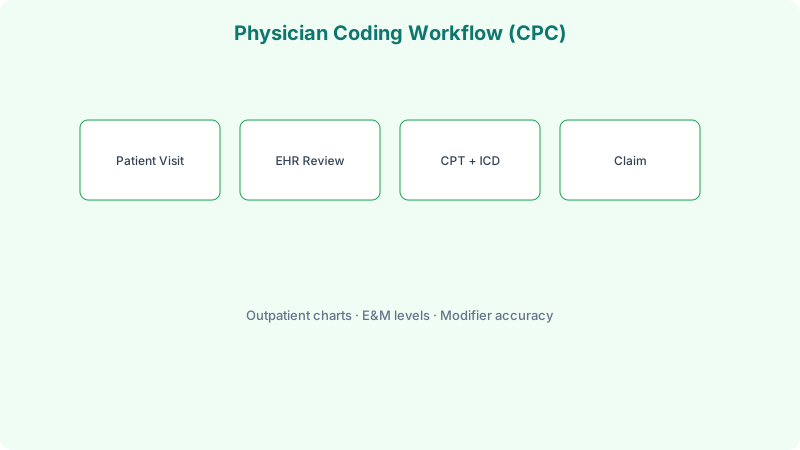
Coders work inside the healthcare revenue cycle: documentation is created during patient care, codes are assigned by certified professionals, claims are submitted by medical billers, and payers reimburse providers. A single coding error can trigger claim denials, delayed payments, or CMS compliance investigations.
Quick Fact: The US processes over one billion health insurance claims annually. Each claim depends on accurate diagnosis and procedure coding — which is why certified coders remain in sustained demand despite automation headlines.
In India, most medical coding jobs serve US healthcare clients remotely. Coders access de-identified patient charts through secure systems and apply AAPC and AHIMA coding guidelines. Understanding the medical coding CPC vs CCS distinction is essential because employers filter résumés by the credential that matches their coding environment.
Why Medical Coding Certifications Matter
Certification is not legally mandatory to assign codes, but it functions as the industry's quality signal. Employers — especially RCM firms, hospitals, and insurance companies — use credentials to verify that a candidate understands current code sets, compliance rules, and documentation standards.
Why hiring managers prefer certified coders:
- Reduced onboarding time — certified hires need less foundational training
- Lower denial rates — accurate coding improves first-pass claim acceptance
- Audit readiness — certified professionals understand compliance documentation
- Career progression — credentials unlock senior, audit, and CDI roles
"The best certification is the one that aligns with your career goals, not just industry popularity."
For Indian graduates, certification also bridges the gap between clinical education (pharmacy, nursing, biotechnology) and the specific US coding standards employers require. A structured medical coding course combined with CPC or CCS exam preparation converts academic knowledge into hireable skill.
What Is CPC Certification?
CPC (Certified Professional Coder) is the flagship credential from AAPC (American Academy of Professional Coders). It validates proficiency in physician and outpatient coding — the type of work performed in clinics, specialty practices, ambulatory surgery centers, and the RCM companies that support them.
CPC holders demonstrate ability to:
- Assign ICD-10-CM diagnosis codes from clinical documentation
- Apply CPT procedure codes with correct modifiers
- Use HCPCS Level II codes for supplies, drugs, and services
- Understand evaluation and management (E&M) level selection
- Apply compliance and regulatory guidelines in outpatient settings
Expert Tip: New CPC passers without required experience may receive CPC-A (apprentice) status. This is normal — many Indian graduates start as CPC-A and upgrade after their first coding job.
CPC is the most requested credential on fresher job postings in India's healthcare BPO and outsourcing sector. If your goal is a medical coding career in RCM, CPC is typically the highest-ROI first step.
What Is CCS Certification?
CCS (Certified Coding Specialist) is awarded by AHIMA (American Health Information Management Association). It validates coding skill across inpatient and outpatient hospital settings, with particular emphasis on complex medical records and ICD-10-PCS procedure coding.
CCS holders demonstrate ability to:
- Abstract codes from complete inpatient medical records
- Assign ICD-10-PCS procedure codes for hospital surgeries and interventions
- Apply ICD-10-CM, CPT, and HCPCS in hospital contexts
- Understand DRG assignment principles and hospital reimbursement
- Navigate health information management workflows
CCS is the credential hospital coding departments, academic medical centers, and health information management teams recognize. It is a stronger fit for coders who want inpatient careers than for most Indian BPO entry points.
History of CPC Certification
AAPC was founded in 1988 to elevate professional standards in physician practice coding. The CPC credential emerged as outpatient care expanded and physician practices needed coders who understood the unique documentation and billing requirements of clinic-based medicine. Today AAPC certifies over 200,000 members worldwide and offers specialty credentials in cardiology, orthopedics, gastroenterology, and more.
History of CCS Certification
AHIMA traces its roots to 1928 and has long set standards for health information management in hospitals. The CCS credential evolved as inpatient coding complexity grew — particularly with DRG-based reimbursement and the transition to ICD-10. AHIMA credentials remain deeply embedded in hospital health information departments and academic programs.
Who Issues CPC and CCS?
| Feature | CPC | CCS |
|---|---|---|
| Issuing Body | AAPC | AHIMA |
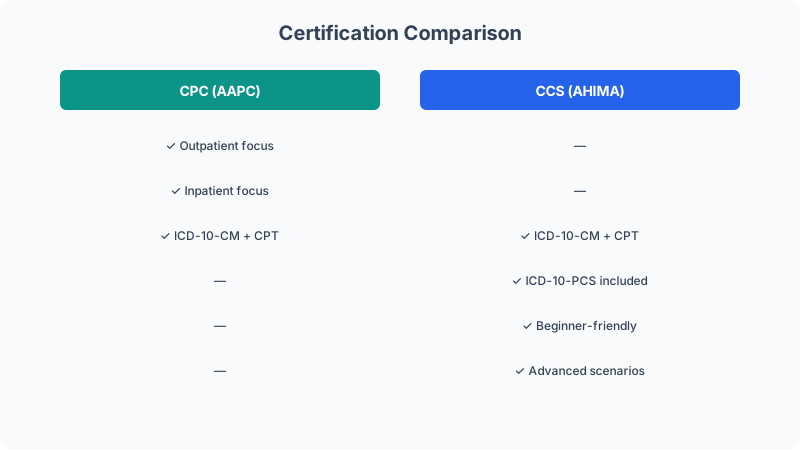
| Primary Focus | Physician / outpatient coding | Hospital / inpatient coding |
| Membership Required | Yes (AAPC membership) | Yes (AHIMA membership) |
| Global Reach | Strong in US outpatient & RCM | Strong in US hospitals & HIM |
| Specialty Credentials | COC, CPC-P, CRC, CPB, and more | CCS-P, RHIT, RHIA pathways |
Both organizations publish coding guidelines, offer continuing education, and maintain professional standards. Neither is "better" universally — each serves a different segment of the healthcare revenue cycle.
Eligibility Requirements: CPC vs CCS
Neither credential requires a specific degree from AAPC or AHIMA, but practical readiness differs significantly.
| Requirement | CPC | CCS |
|---|---|---|
| Formal education | Not mandated by AAPC; training strongly recommended | Not mandated by AHIMA; HIM background helpful |
| Coding experience | Not required to sit exam; experience needed to drop CPC-A | Inpatient experience strongly recommended |
| Membership | Active AAPC membership required | Active AHIMA membership required |
| Best backgrounds | Life sciences, pharmacy, nursing, any graduate | Nursing, HIM graduates, experienced coders |
Warning: Always verify current eligibility on official AAPC and AHIMA websites before registering. Requirements and fees change periodically.
Exam Pattern Comparison
| Feature | CPC Exam | CCS Exam |
|---|---|---|
| Question style | Multiple-choice | Multiple-choice + scenario-based |
| Approximate length | 100 questions | Varies; confirm with AHIMA |
| Open book | Yes (approved manuals) | Limited; verify current policy |
| Primary code sets | ICD-10-CM, CPT, HCPCS II | ICD-10-CM, ICD-10-PCS, CPT, HCPCS |
| Setting focus | Physician / outpatient | Inpatient + outpatient hospital |
Exam Duration and Format
The CPC exam allows approximately 4 hours for 100 questions when taken in the standard format. Candidates use approved code manuals during the test — speed in manual navigation is as important as coding knowledge.
The CCS exam tests ability to code complete cases from medical record excerpts. Scenario questions require synthesizing diagnosis and procedure codes across an entire inpatient stay. Time management and PCS lookup speed are critical success factors.
Passing Score Requirements
AAPC typically requires 70% to pass the CPC exam. AHIMA uses scaled scoring for CCS — consult their certification handbook for the current passing standard. Retake policies and fees apply for both exams.
Certification Validity and Renewal
Both credentials require ongoing maintenance — they are not lifetime certifications.
| Aspect | CPC | CCS |
|---|---|---|
| Renewal cycle | Every 2 years (AAPC) | Per AHIMA recertification cycle |
| CEU requirement | 36 CEUs per cycle (verify current) | Per AHIMA guidelines |
| Membership | Active AAPC membership | Active AHIMA membership |
| Lapse consequence | Credential suspension until requirements met | Recertification requirements apply |
Continuing Education (CEUs)
Continuing education keeps coders current with annual ICD-10-CM updates, CPT changes, and compliance revisions. Both AAPC and AHIMA maintain approved CEU catalogs including webinars, conferences, and courses.
Industry Insight: CMS publishes ICD-10-CM updates effective October 1 each year. Working coders must track code additions, deletions, and guideline changes — continuous learning is part of the profession, not optional.
Coding Systems Covered by CPC and CCS
| Code System | CPC | CCS | Purpose |
|---|---|---|---|
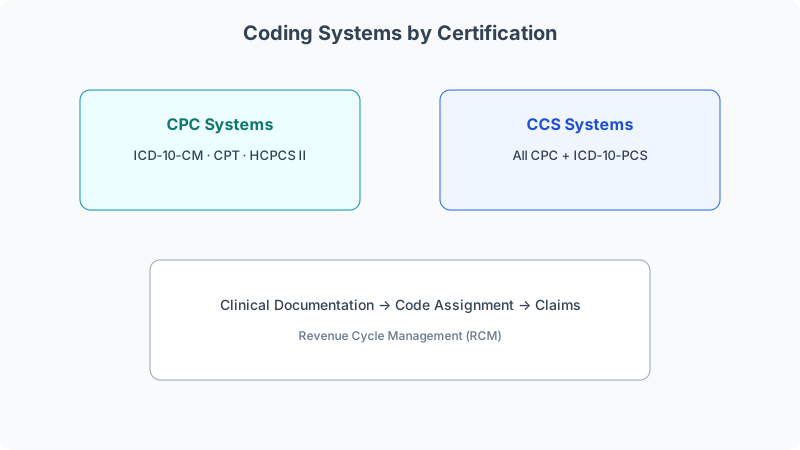
| ICD-10-CM | ✓ Primary | ✓ Primary | Diagnosis coding |
| CPT | ✓ Primary | ✓ | Physician procedures |
| HCPCS Level II | ✓ | ✓ | Supplies, drugs, services |
| ICD-10-PCS | — | ✓ Primary | Inpatient procedures |
ICD-10-CM Explained
ICD-10-CM (International Classification of Diseases, 10th Revision, Clinical Modification) is the diagnosis coding system used in the United States. Coders assign codes that describe patient conditions, symptoms, and reasons for encounters. Specificity matters — vague documentation leads to unspecified codes, which can reduce reimbursement.
ICD-10-PCS Explained
ICD-10-PCS (Procedure Coding System) is used exclusively for inpatient hospital procedures. Unlike CPT, PCS codes are built from seven-character combinations describing body system, root operation, body part, and approach. This is the steepest learning curve for CCS candidates.
Did You Know? ICD-10-PCS contains tens of thousands of valid code combinations. CCS candidates spend significant study time on PCS tables and operative report interpretation.
CPT and HCPCS Level II
CPT (Current Procedural Terminology) describes medical, surgical, and diagnostic procedures performed by physicians. HCPCS Level II covers ambulance services, durable medical equipment, injectable drugs, and other supplies not in CPT. CPC candidates must master modifier application — the two-character codes that clarify procedure circumstances.
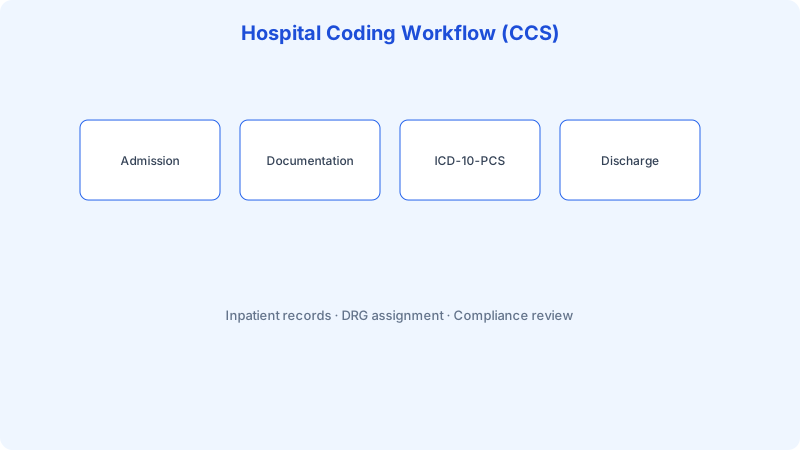
Hospital Coding vs Physician Coding
Understanding this distinction is the core of the CPC vs CCS decision:
| Dimension | Physician Coding (CPC) | Hospital Coding (CCS) |
|---|---|---|
| Documentation | Office visit notes, clinic procedures | Admission, operative, discharge records |
| Code emphasis | CPT + ICD-10-CM | ICD-10-PCS + ICD-10-CM |
| Reimbursement | Fee-for-service, RVUs | DRG-based inpatient payment |
| Typical employer | Clinics, RCM, BPO | Hospitals, health systems |
| India job volume | Very high | Moderate |
"Strong coding skills are built through consistent practice, accurate documentation, and continuous learning — not by collecting credentials without real chart exposure."
Career Opportunities: CPC vs CCS
Your certification opens different doors. The medical coding certification comparison is ultimately a comparison of career ecosystems.
Industries Hiring CPC-Certified Coders
- Healthcare BPO and revenue cycle management (RCM) firms
- Physician group practices and specialty clinics
- Insurance companies and claims processing centers
- Ambulatory surgery centers
- Remote coding vendors serving US providers
- Healthcare IT and analytics companies
- Consulting and compliance audit firms
Industries Hiring CCS-Certified Coders
- Hospital inpatient coding departments
- Academic medical centers and teaching hospitals
- Health information management (HIM) teams
- Hospital outsourcing and shared services
- Clinical documentation improvement (CDI) programs
- Government and VA healthcare facilities (US)
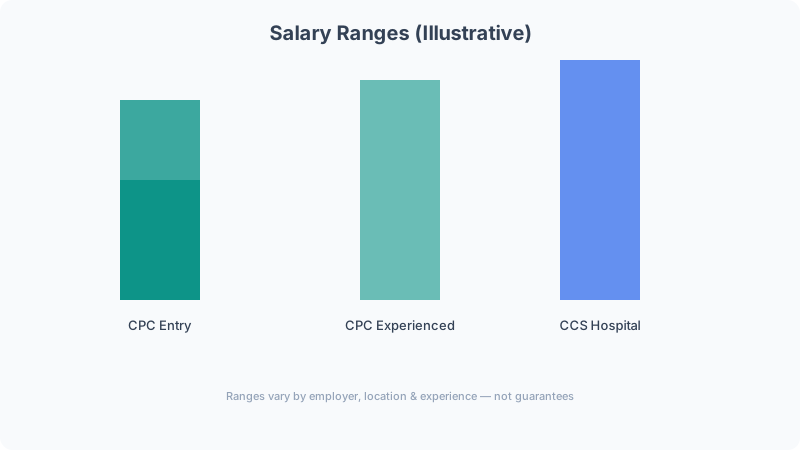
Salary Comparison: CPC vs CCS
Salary depends on employer, geography, specialty, shift allowances, and experience — not certification alone. The ranges below are illustrative for planning purposes, not guarantees.
| Level | CPC (India — Monthly INR) | CCS (India — Monthly INR) | US Market (Annual USD) |
|---|---|---|---|
| Entry (0–1 yr) | ₹18,000 – ₹30,000 | ₹22,000 – ₹35,000* | $40,000 – $55,000 |
| Mid (2–4 yr) | ₹30,000 – ₹50,000 | ₹35,000 – ₹55,000 | $50,000 – $70,000 |
| Senior (5+ yr) | ₹50,000 – ₹90,000+ | ₹55,000 – ₹1,00,000+ | $65,000 – $90,000+ |
*CCS entry roles are fewer in India; many CCS holders work in hospital outsourcing or US-remote hospital contracts.
Detailed fresher data: Medical Coding Salary for Freshers.
Job Growth and Demand
The US Bureau of Labor Statistics projects growth in health information and medical records roles. India's healthcare outsourcing sector continues expanding RCM operations. CPC certification for beginners aligns with the largest hiring volume. CCS demand grows in hospital digitization and inpatient outsourcing but from a smaller base in India.
Quick Fact: Naukri and LinkedIn list medical coding roles daily across Hyderabad, Bangalore, and Chennai — with CPC listed as preferred or mandatory on most fresher postings for outpatient RCM work.
Certification Difficulty Comparison
| Factor | CPC | CCS |
|---|---|---|
| Learning curve | Moderate for beginners | Steep — requires inpatient knowledge |
| Exam style | Structured multiple-choice | Complex scenario-based |
| PCS knowledge | Not required | Essential |
| Typical first-attempt pass | Higher with structured training | Lower without inpatient practice |
| Retake frequency | Common; plan for 1–2 attempts | Common; allow extra prep time |
Study Time and Learning Curve
CPC: 3–6 months with full-time training; 4–8 months for working professionals on weekend batches.
CCS: 6–12 months for candidates without inpatient experience; 4–6 months for experienced hospital coders.
Remote Work Opportunities
Both credentials support remote work, but CPC holders dominate India's remote RCM workforce. US client-facing roles often require evening or night shifts (IST). After 1–2 years of production experience, many coders transition to fully remote arrangements.
Career Progression Ladder
| Stage | CPC Path | CCS Path |
|---|---|---|
| Entry | Junior Medical Coder | Inpatient Coding Trainee |
| Growth | Specialty Coder, Coding Analyst | Hospital Coding Specialist |
| Mid | Senior Coder, QA Reviewer | Lead Inpatient Coder |
| Advanced | CDI Specialist, Audit Manager | HIM Manager, Coding Director |
| Leadership | RCM Operations Lead | Health Information Director |
Career guide: How to Become a Medical Coder in India.
Preparation Strategy: CPC vs CCS
A structured plan beats random study. Here is how successful candidates approach each exam.
CPC Preparation Strategy
- Master medical terminology and anatomy foundations (4–6 weeks)
- Study ICD-10-CM guidelines chapter by chapter
- Practice CPT with modifier drills and E&M level selection
- Complete weekly timed mock exams (build to 100 questions / 4 hours)
- Tab and highlight official code manuals for exam-day speed
- Review missed questions with a certified mentor
CCS Preparation Strategy
- Build strong ICD-10-CM foundation (shared with CPC study)
- Dedicate focused blocks to ICD-10-PCS tables and root operations
- Practice coding complete inpatient cases from discharge summaries
- Study DRG concepts and hospital reimbursement basics
- Use AHIMA practice exams and hospital coding workbooks
- Seek inpatient chart exposure through internships or job shadowing
Recommended Books and Resources
CPC resources:
- Current year ICD-10-CM, CPT, and HCPCS official manuals
- AAPC-approved study guides and practice exams
- Medical terminology and anatomy references
- QuickCode CPC Certification Training with live chart practicum
CCS resources:
- ICD-10-PCS coding manual and workbooks
- AHIMA exam preparation materials
- Inpatient case study collections
- Hospital coding practicum through employers or internships
Exam planning: CPC Exam Calendar Guide.
Daily Study Plan (CPC Track — 12 Weeks)
| Week | Focus | Daily Hours | Activity |
|---|---|---|---|
| 1–2 | Terminology + Anatomy | 2–3 | Flashcards, body systems |
| 3–4 | ICD-10-CM | 2–3 | Guideline chapters, case drills |
| 5–6 | CPT + Modifiers | 3 | Procedure coding, E&M |
| 7–8 | HCPCS + Compliance | 3 | Supply codes, HIPAA basics |
| 9–10 | Timed mocks | 3–4 | Full 100-question simulations |
| 11–12 | Weak area review | 3–4 | Manual speed, exam registration |
Common Exam Mistakes to Avoid
- Skipping anatomy: You cannot code what you cannot read in documentation
- Ignoring guidelines: ICD-10-CM chapters 1–3 rules appear on every exam
- Not timing mocks: CPC is a speed test as much as a knowledge test
- Using outdated manuals: Always use the exam year's code books
- PCS neglect (CCS): Underestimating ICD-10-PCS difficulty is the top CCS failure reason
- Cramming modifiers: Modifier rules require pattern practice, not memorization alone
Warning: Exam costs, membership fees, and manual purchases add up. Budget for potential retakes — most successful coders pass within two attempts.
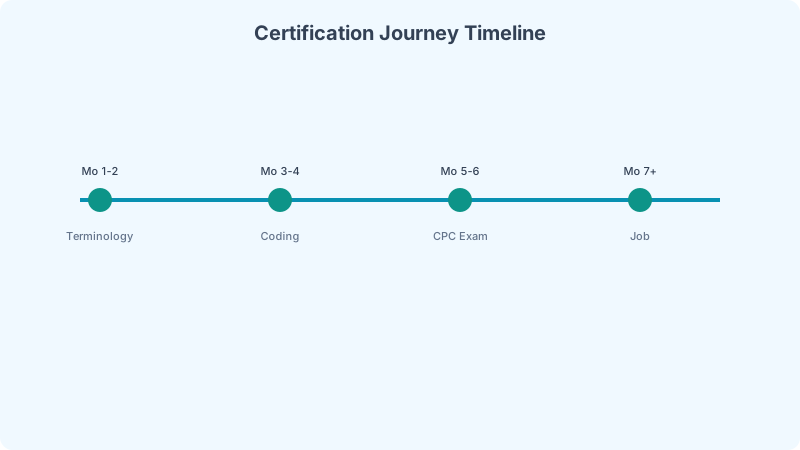
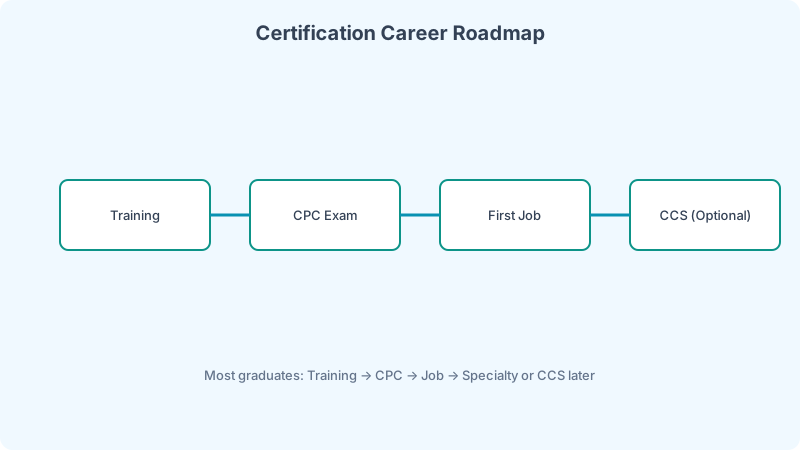
Certification Roadmap (Recommended Path)
- Month 1–2: Enroll in structured medical coding training — anatomy, terminology, coding intro
- Month 3–4: ICD-10-CM + CPT deep dive with real outpatient charts
- Month 5: Timed CPC mock exams; register for AAPC membership and exam
- Month 6: Pass CPC; begin job applications at RCM and BPO firms
- Year 2–3: Gain production experience; consider specialty credentials (CPC-A removal, CRC, COC)
- Year 3+ (optional): Pursue CCS if transitioning to inpatient hospital coding
Career Tip: Choosing the right certification today can shape your healthcare career for years to come. Start with CPC unless you already have a clear inpatient hospital path.
AI and the Future of Medical Coding Certifications
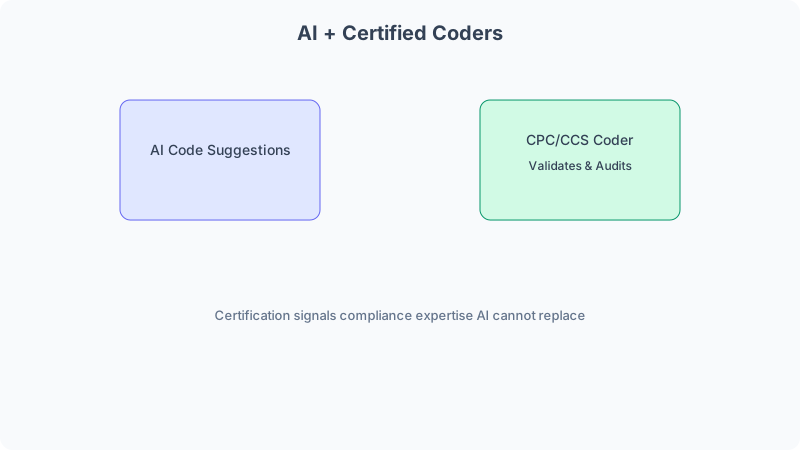
Artificial intelligence is transforming healthcare analytics and coding workflows — but it is not eliminating certified coders. AI tools suggest codes from clinical documentation; human coders validate, handle exceptions, audit accuracy, and ensure compliance.
How AI changes the profession:
- Automated code suggestions reduce routine lookup time
- Coders shift toward quality assurance and complex case review
- CDI and audit roles grow as organizations need human oversight
- Certifications prove ability to validate AI output — a skill employers value
Industry Insight: Demand is shifting toward coders who can audit AI-assisted coding — not away from certified professionals. Credentials remain the hiring filter.
Who Should Choose CPC?
Choose CPC certification if you:
- Are a beginner or career switcher entering medical coding
- Target RCM, BPO, or outpatient physician coding roles in India
- Hold a pharmacy, nursing, biotechnology, or life sciences degree
- Want the fastest path to employability in the outsourcing market
- Plan to work remotely for US healthcare clients
- Prefer a structured, open-book exam with established training pipelines
Who Should Choose CCS?
Choose CCS certification if you:
- Already have inpatient hospital coding experience
- Work or plan to work in hospital health information management
- Want to code complex surgical and medical inpatient cases
- Are pursuing CDI or hospital coding leadership roles
- Have access to inpatient chart practicum through an employer
- Completed CPC and want to expand into hospital coding
Can You Earn Both CPC and CCS?
Yes — and many senior professionals do. The typical sequence is CPC first, CCS later. CPC builds outpatient fundamentals and employability; CCS adds inpatient depth when you are ready. Holding both demonstrates comprehensive revenue cycle knowledge.
Maintaining both requires dual membership, CEU tracking, and renewal fees. Pursue the second credential when your career direction justifies the investment.
Decision Framework: CPC or CCS?
Best choice for beginners: CPC — broader job market, accessible exam, aligned with India's RCM hiring pipeline.
Best choice for inpatient hospital coders: CCS — validates ICD-10-PCS and complex record abstraction.
Best choice when unsure: Start CPC. Reassess CCS after 1–2 years of coding experience.
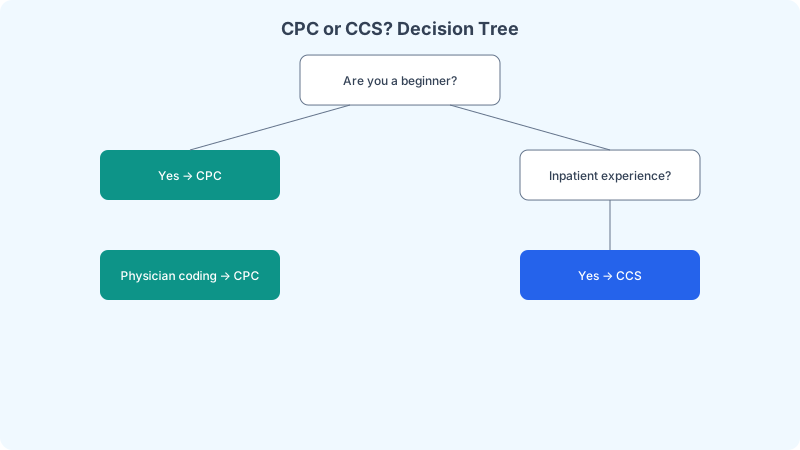
Decision tree:
- Are you a beginner? → Choose CPC
- Do you have inpatient hospital coding experience? → Consider CCS
- Do you want hospital coding careers? → CCS (after building foundation)
- Do you want physician/outpatient coding? → CPC
- Do you want the broadest entry-level foundation? → Start with CPC
Premium Comparison Tables
Feature Comparison
| Feature | CPC | CCS |
|---|---|---|
| Issuing organization | AAPC | AHIMA |
| Primary setting | Outpatient / physician | Inpatient / hospital |
| ICD-10-PCS required | No | Yes |
| Beginner-friendly | Yes | No |
| India entry-level jobs | Very high | Moderate |
| Open-book exam | Yes (standard format) | Verify with AHIMA |
| Typical study duration | 3–6 months | 6–12 months |
| Global recognition | US outpatient, RCM, global BPO | US hospitals, HIM |
Exam Cost Planning (Verify with Official Sources)
| Cost Item | CPC (Approximate USD) | CCS (Approximate USD) |
|---|---|---|
| Membership (annual) | $190 – $250 | Varies by AHIMA tier |
| Exam registration | $299 – $399 | Verify with AHIMA |
| Official code manuals | $300 – $500+ | $400 – $600+ |
| Training program | ₹25,000 – ₹65,000 (India) | Similar or higher |
| Retake fee | Apply per AAPC policy | Apply per AHIMA policy |
Fees change. Always confirm current pricing on AAPC and AHIMA before budgeting.
Advantages and Disadvantages
| CPC | CCS | |
|---|---|---|
| Advantages | Largest job market; beginner-friendly; strong India demand; open-book exam; clear training path | Hospital career access; PCS expertise; HIM recognition; higher complexity cases |
| Disadvantages | Does not validate inpatient PCS; CPC-A without experience | Steep learning curve; fewer India entry jobs; harder exam; needs inpatient exposure |
| Best for | Freshers, RCM/BPO, outpatient coding | Hospital coders, HIM professionals, inpatient specialists |
Interview Preparation and Resume Tips
Resume optimization for CPC candidates:
- Lead with CPC or CPC-A credential prominently
- List coding systems: ICD-10-CM, CPT, HCPCS Level II
- Quantify chart volume during training (e.g., "Coded 200+ outpatient charts")
- Mention EHR platforms and coding software exposure
- Include mock exam scores if strong (e.g., "Consistently scored 85%+ on timed CPC mocks")
LinkedIn optimization:
- Add "CPC" or "CPC-A" to your headline
- Join AAPC and medical coding groups
- Share certification journey milestones
- Connect with RCM recruiters in Hyderabad, Bangalore, and Chennai
Interview prep: Medical Coding vs Medical Billing · Certified Medical Coder Guide.
Myths vs Reality
| Myth | Reality |
|---|---|
| CCS always pays more | Pay depends on role, employer, and experience — not credential alone |
| CPC is "easier" so less valuable | CPC is the industry standard for outpatient hiring; difficulty ≠ value |
| You need both to get hired | Most entry jobs require only CPC; CCS is a career expansion |
| AI will eliminate coding jobs | AI augments coders; certification proves validation expertise |
| Any institute certification equals CPC/CCS | Only AAPC and AHIMA issue CPC and CCS — institute certificates are training proof, not credentials |
30 SEO Title Options (For Reference)
- Medical Coding CPC vs CCS: Which Certification Should You Choose?
- CPC vs CCS Compared: Salary, Difficulty, Jobs & Career Growth
- AAPC CPC vs AHIMA CCS (Complete 2026 Guide)
- CPC or CCS? The Ultimate Medical Coding Certification Comparison
- Medical Coding Certifications Explained: CPC vs CCS
- Which Medical Coding Certification Is Right for You?
- CPC vs CCS Certification: Exam, Salary & Job Opportunities
- Best Medical Coding Certification for Beginners — CPC or CCS?
- Medical Coding CPC vs CCS: Salary, Exam Difficulty & Career Path
- AAPC vs AHIMA: CPC and CCS Certification Guide 2026
- CPC or CCS for Pharmacy Graduates? Complete Comparison
- Medical Coding Certification Comparison: CPC vs CCS
- How to Choose Between CPC and CCS Certifications
- CPC vs CCS Exam Difficulty — Which Is Easier to Pass?
- Medical Coding CPC vs CCS for Indian Graduates
- Hospital Coding vs Physician Coding: CCS vs CPC
- Medical Coding Credentials Guide: CPC vs CCS Explained
- CPC vs CCS Job Opportunities in India (2026)
- Medical Coding Certification Roadmap: Start with CPC or CCS?
- CPC vs CCS Salary Comparison for Medical Coders
- Which Pays More — CPC or CCS Certification?
- Medical Coding Training: CPC vs CCS Pathways
- CCS vs CPC for Nursing and Life Science Graduates
- Complete CPC vs CCS Certification Guide for Freshers
- Medical Coding CPC vs CCS: Expert Comparison 2026
- AHIMA CCS vs AAPC CPC — Certification Deep Dive
- CPC vs CCS: Exam Pattern, Cost & Renewal Compared
- Best Starting Certification for Medical Coding Career
- Medical Coding CPC vs CCS — Decision Guide for Career Switchers
- CPC vs CCS: The Definitive Medical Coding Certification Comparison
Featured Snippet Answers
What is CPC in medical coding? CPC (Certified Professional Coder) is an AAPC certification for physician and outpatient coding using ICD-10-CM, CPT, and HCPCS Level II.
What is CCS in medical coding? CCS (Certified Coding Specialist) is an AHIMA certification for hospital inpatient and outpatient coding, including ICD-10-PCS procedure coding.
CPC vs CCS — which is better for beginners? CPC is better for most beginners because it matches India's RCM job market and has a more accessible exam pathway.
Key differences at a glance:
- CPC = AAPC, outpatient, beginner-friendly, highest India job volume
- CCS = AHIMA, inpatient, advanced, hospital HIM careers
- Start with CPC unless you have inpatient hospital experience
Preparation Checklist: ☐ Anatomy & terminology ☐ ICD-10-CM guidelines ☐ CPT + modifiers ☐ HCPCS ☐ Timed mock exams ☐ Official manuals tabbed ☐ AAPC membership ☐ Exam registration
Certification Cost Planning Checklist
- ☐ AAPC or AHIMA membership fee (annual)
- ☐ Exam registration fee (budget for possible retake)
- ☐ Current year ICD-10-CM, CPT, HCPCS manuals
- ☐ ICD-10-PCS manual (CCS only)
- ☐ Training program fee
- ☐ Practice exam subscriptions
- ☐ CEU budget for renewal cycles
Verify all fees on official AAPC and AHIMA websites before enrolling — costs change annually.
Related Guides and Resources
- How to Become a Medical Coder in India
- Certified Medical Coder Guide
- Medical Coding Salary for Freshers
- CPC Exam Calendar Guide
- Medical Coding vs Medical Billing
- AI Is Transforming Medical Coding
- Best Medical Coding Institutes in Hyderabad
- Best Medical Coding Institutes in Bangalore
- CPC Certification Training in Hyderabad
- Medical Coding Online Course in India
- Medical Coding Internship Guide
- Medical Coding Jobs in UAE
- CPC Certification Training Program
- Medical Coding Training Program
- Medical Coding Training in Hyderabad
- Online Medical Coding Course
- Enroll — Free Demo Class
External authority references:
- AAPC — CPC Certification
- AHIMA — Certification Programs
- CMS — Medicare Coding
- WHO — ICD Classification
People Also Ask: Medical Coding CPC vs CCS
Common questions about CPC vs CCS certification, exam difficulty, salary, and career paths. Expand each for a concise answer — or see our full FAQ section.
What is CPC certification in medical coding?
CPC (Certified Professional Coder) is an AAPC credential validating outpatient and physician coding skills using ICD-10-CM, CPT, and HCPCS Level II.
What is CCS certification in medical coding?
CCS (Certified Coding Specialist) is an AHIMA credential for hospital inpatient and outpatient coding, including ICD-10-PCS procedure coding.
Is CPC or CCS better for beginners?
CPC is better for most beginners because it aligns with India's RCM hiring market and has a more accessible learning curve.
Which certification pays more CPC or CCS?
Salaries depend on experience and employer. CCS hospital roles may pay slightly more in the US; in India CPC entry jobs are more abundant.
Is the CPC exam harder than CCS?
Most candidates find CCS harder due to inpatient complexity and ICD-10-PCS. CPC is generally considered more approachable for first-time certifiers.
Can I do CCS without CPC?
Yes, but CCS is difficult without coding fundamentals. Most advisors recommend CPC first unless you have inpatient hospital experience.
How long does it take to get CPC certification?
With structured training, 3–6 months of study before the exam is typical for beginners.
How long does it take to get CCS certification?
Plan 6–12 months without inpatient experience; 4–6 months for experienced hospital coders.
What is the CPC exam pass rate?
AAPC does not publish exact pass rates publicly. Structured training and timed mocks significantly improve outcomes.
What is AAPC?
AAPC (American Academy of Professional Coders) is the leading US organization for physician and outpatient coding certification.
What is AHIMA?
AHIMA (American Health Information Management Association) sets standards for health information management and hospital coding credentials.
Do hospitals prefer CCS or CPC?
US hospitals typically prefer CCS or CCS-P for inpatient coding. Outpatient hospital departments may hire CPC holders.
Do BPO companies prefer CPC or CCS?
Indian healthcare BPO and RCM firms overwhelmingly prefer CPC for outpatient chart coding roles.
Can pharmacy graduates get CPC certification?
Yes. Pharmacy graduates are well suited for CPC because clinical knowledge accelerates chart comprehension.
Can nursing graduates get CPC certification?
Yes. Nursing graduates excel at reading clinical documentation and commonly pursue CPC for RCM careers.
Can MBBS doctors do medical coding?
Yes. MBBS graduates often pursue CPC for consulting, auditing, and RCM roles leveraging clinical expertise.
What is ICD-10-PCS?
ICD-10-PCS is the inpatient procedure coding system used in US hospitals. It is central to CCS but not required for CPC.
What coding books do I need for CPC?
Current year ICD-10-CM, CPT, and HCPCS Level II official manuals approved for the exam.
How much does CPC certification cost?
Total costs including membership, exam, and manuals typically range from $700–$1,200 USD. Verify on AAPC's website.
How much does CCS certification cost?
Comparable to or slightly higher than CPC. Confirm current AHIMA fees before budgeting.
Is CPC valid in India?
CPC is recognized by Indian RCM and BPO employers serving US healthcare clients. It validates US coding standards.
Is CCS valid in India?
CCS is recognized by hospital outsourcing units but has fewer entry-level openings than CPC in India.
Can I work from home with CPC?
Yes. Many CPC-certified coders work remotely for US clients from India after training.
Can I work from home with CCS?
Yes, especially for US hospital remote coding contracts, though CPC remote roles are more common in India.
What is CPC-A?
CPC-A is apprentice status for CPC holders who have not yet met AAPC's experience requirement to hold full CPC.
How do I remove CPC-A?
Complete the required coding experience and submit documentation to AAPC per their apprentice removal policy.
What jobs can CPC get you?
Medical Coder, Coding Analyst, RCM Associate, Outpatient Coder, Specialty Coder, and QA roles.
What jobs can CCS get you?
Inpatient Coder, Hospital Coding Specialist, HIM Technician, CDI roles, and coding quality analyst positions.
Should I learn medical billing or coding first?
Coding first — especially CPC — because billing depends on accurate codes. See our billing vs coding guide.
What is the difference between AAPC and AHIMA?
AAPC focuses on physician/outpatient coding (CPC). AHIMA focuses on health information management and hospital coding (CCS).
Can I take CPC exam online?
AAPC offers online proctored exam options. Verify current delivery methods on AAPC's website.
What is the CPC exam format?
Typically 100 multiple-choice questions in 4 hours, open book with approved manuals.
What is on the CCS exam?
Multiple-choice and scenario-based questions covering inpatient/outpatient hospital coding and ICD-10-PCS.
How many CEUs for CPC renewal?
AAPC typically requires 36 CEUs per two-year cycle. Verify current requirements on AAPC's site.
Will AI replace medical coders?
AI assists coding but certified human coders remain essential for validation, complex cases, and compliance.
What is the best medical coding certification?
The best certification matches your career target. For most beginners, CPC is the best starting credential.
CPC vs COC — which is better?
CPC is for physician/outpatient coding. COC (Certified Outpatient Coder) is a specialty outpatient credential. CPC is broader.
CPC vs CCS-P?
CCS-P is AHIMA's physician-based credential. CPC from AAPC is more widely requested in Indian RCM hiring.
Can biotechnology students do medical coding?
Yes. Biotechnology and life sciences graduates are common in medical coding training programs.
What is medical coding salary in India?
Fresh CPC-certified coders typically earn ₹18,000–₹30,000/month. Experience and specialty increase earnings.
Is medical coding a good career in 2026?
Yes. Healthcare outsourcing and US aging demographics sustain demand for certified coders.
What is the CPC passing score?
AAPC typically requires 70% to pass. Confirm the current threshold when you register.
How to prepare for CPC exam?
Study terminology, ICD-10-CM, CPT, HCPCS; complete timed mocks; tab your manuals; join structured training.
How to prepare for CCS exam?
Master ICD-10-PCS, practice inpatient case coding, use AHIMA prep materials, and get hospital chart exposure.
Can I do medical coding after BSc?
Yes. Any bachelor's degree is generally sufficient for medical coding training and certification.
What is clinical documentation in coding?
Clinical documentation is the physician and nurse record in the EHR that coders review to assign accurate codes.
What is revenue cycle management?
RCM is the financial process from patient registration through claim submission, payment, and denial management.
What is DRG in hospital coding?
Diagnosis Related Groups classify inpatient stays for Medicare reimbursement — relevant to CCS hospital coding.
Do I need anatomy for medical coding?
Yes. Anatomy and medical terminology are foundational for reading clinical documentation accurately.
What is the best CPC training in Hyderabad?
Look for institutes with CPC-certified trainers, real chart practicum, and timed mock exams. QuickCode Solutions offers structured CPC training.
Can I get CPC and CCS both?
Yes. Many senior coders hold both. The typical path is CPC first, then CCS after gaining experience.
What is HIPAA in medical coding?
HIPAA is the US health privacy law. Coders must understand compliance requirements when handling patient data.
What shift do medical coders work in India?
US client roles often require evening/night shifts. Some UK and domestic roles offer day shifts.
Is CCS harder than CPC?
Generally yes — due to ICD-10-PCS, inpatient case complexity, and scenario-based exam format.
What is the difference between ICD-10-CM and ICD-10-PCS?
ICD-10-CM codes diagnoses. ICD-10-PCS codes inpatient hospital procedures. CPC focuses on CM; CCS requires both.
How to choose medical coding certification?
Match certification to your target employer type: CPC for outpatient/RCM, CCS for hospital inpatient.
What is E/M coding?
Evaluation and Management coding assigns visit levels for physician office encounters — a core CPC exam topic.
What are CPT modifiers?
Two-character codes appended to CPT codes to indicate special circumstances without changing procedure definition.
Can arts graduates do medical coding?
Yes. Arts and commerce graduates regularly pass CPC with dedicated terminology and anatomy study.
What is CDI in medical coding?
Clinical Documentation Improvement ensures physician documentation supports accurate code assignment and reimbursement.
How often are coding books updated?
ICD-10-CM updates annually (October 1). CPT updates annually (January 1). Use current year manuals for exams.
Frequently Asked Questions
What is the difference between CPC and CCS certification?
CPC (Certified Professional Coder) from AAPC focuses on physician and outpatient coding using ICD-10-CM, CPT, and HCPCS Level II. CCS (Certified Coding Specialist) from AHIMA emphasizes hospital inpatient coding, including ICD-10-PCS procedure coding. CPC suits clinic and RCM roles; CCS suits hospital coding departments.
Which is better — CPC or CCS for beginners?
For most beginners targeting outpatient RCM, BPO, and physician coding jobs, CPC is the better first credential. It has a broader entry-level job market, a more accessible learning curve, and aligns with how most Indian graduates enter US healthcare outsourcing. CCS is better as a second credential for those pursuing inpatient hospital coding.
Is CPC or CCS easier to pass?
Most candidates find the CPC exam more approachable for a first certification because it focuses on outpatient scenarios with open-book manual use. The CCS exam is widely regarded as more difficult due to inpatient complexity, ICD-10-PCS procedure coding, and scenario-based questions. Difficulty varies by your clinical background and study plan.
Which certification pays more — CPC or CCS?
Salaries depend on employer, location, specialty, and experience — not certification alone. In the US, experienced CCS holders in hospital settings may earn slightly more on average. In India, CPC-certified coders in RCM and BPO roles typically see strong starting salaries. Neither credential guarantees a specific pay level.
Who issues CPC certification?
The Certified Professional Coder (CPC) credential is issued by AAPC (American Academy of Professional Coders), one of the largest medical coding membership organizations in the United States. AAPC also offers specialty credentials such as CPC-A, CPB, and CRC.
Who issues CCS certification?
The Certified Coding Specialist (CCS) credential is issued by AHIMA (American Health Information Management Association), a leading authority in health information management and hospital coding standards.
What is the CPC exam format?
The AAPC CPC exam typically includes 100 multiple-choice questions completed in 4 hours. It is open book when taken with approved official code manuals. Topics cover ICD-10-CM, CPT, HCPCS Level II, compliance, and medical terminology. Always verify current exam details on AAPC's official website before registering.
What is the CCS exam format?
The AHIMA CCS exam uses multiple-choice and scenario-based questions covering inpatient and outpatient coding, ICD-10-CM, ICD-10-PCS, CPT, and medical record review. Exam length and question count may change — confirm the latest format, eligibility, and fees directly with AHIMA before applying.
What is the passing score for the CPC exam?
AAPC typically requires a score of 70% or higher to pass the CPC exam. Passing thresholds and policies can change, so verify the current requirement on AAPC's official certification page at the time you register.
What is the passing score for the CCS exam?
AHIMA sets the CCS passing standard based on exam performance data. Check AHIMA's official certification handbook for the current scaled score requirement and retake policies before scheduling your exam.
How long is CPC certification valid?
CPC certification is maintained through AAPC membership and continuing education. Certified members must earn continuing education units (CEUs) within each two-year renewal cycle and keep membership active. Specific CEU requirements are published on AAPC's website.
How long is CCS certification valid?
CCS certification requires ongoing recertification through AHIMA's continuing education program. Certified professionals must complete required CEUs within each recertification cycle. Review AHIMA's current recertification guidelines for exact CEU counts and deadlines.
Can I get CPC certification without experience?
Yes. New coders can pass the CPC exam without prior work experience. If you lack the required coding experience at certification, AAPC may award CPC-A (apprentice) status until experience requirements are met. Many Indian graduates earn CPC-A first and upgrade after employment.
Do I need hospital experience for CCS?
Hospital or inpatient coding experience is strongly recommended before attempting CCS, though AHIMA's official eligibility requirements should be verified directly. The exam tests inpatient record review and ICD-10-PCS skills that are difficult to master without practical exposure.
Which certification has more job opportunities in India?
CPC has significantly more entry-level job opportunities in India because most healthcare BPO, RCM, and outsourcing firms hire for outpatient and physician coding roles. CCS-relevant hospital inpatient positions are fewer in the Indian market, though some hospital outsourcing units do hire CCS-oriented coders.
Can pharmacy graduates pursue CPC or CCS?
Yes. Pharmacy graduates are well suited for both certifications because drug knowledge and clinical terminology accelerate chart comprehension. Most Indian pharmacy graduates start with CPC training because it aligns with the dominant RCM hiring pipeline.
Can nursing graduates pursue CPC or CCS?
Yes. Nursing graduates often excel at reading operative notes, discharge summaries, and clinical documentation. CPC is the common starting point for nurses entering RCM roles in India. Nurses targeting hospital CDI or inpatient coding may later pursue CCS.
Can MBBS graduates do medical coding?
Yes. MBBS graduates bring strong clinical knowledge that helps with complex case coding. Many pursue CPC first for faster entry into RCM and consulting roles. CCS may appeal to those interested in hospital coding leadership or clinical documentation improvement.
What coding systems does CPC cover?
CPC covers ICD-10-CM diagnosis coding, CPT procedure coding, HCPCS Level II supplies and services, modifier application, compliance basics, and evaluation and management (E&M) coding for physician/outpatient settings.
What coding systems does CCS cover?
CCS covers ICD-10-CM, ICD-10-PCS (inpatient procedure coding), CPT, HCPCS Level II, and medical record abstraction across inpatient and outpatient hospital settings.
What is ICD-10-PCS and why does CCS require it?
ICD-10-PCS is the procedure coding system used for inpatient hospital procedures in the US. CCS candidates must understand PCS because hospital coders assign procedure codes from operative reports and inpatient records — a skill set beyond typical outpatient CPC scope.
How much does the CPC exam cost?
CPC exam fees include AAPC membership and exam registration. Total costs typically range from approximately $450 to $550 USD depending on membership type and whether you bundle exam attempts. Fees change — always verify current pricing on AAPC's official site.
How much does the CCS exam cost?
CCS exam costs include AHIMA membership and exam registration. Total investment is generally comparable to or slightly higher than CPC depending on membership tier and study materials. Confirm current fees on AHIMA's certification page before budgeting.
How long should I study for the CPC exam?
Most beginners with structured training study 3 to 6 months before attempting CPC. Life sciences graduates may progress faster with consistent daily practice, timed mock exams, and real chart review. Working professionals often need 4 to 8 months on weekend batches.
How long should I study for the CCS exam?
CCS preparation typically requires 6 to 12 months for candidates without inpatient experience. Even experienced outpatient coders often need additional PCS study time. Plan for extended mock exams and hospital record practice before scheduling the test.
Can I hold both CPC and CCS certifications?
Yes. Many senior coders earn CPC first for outpatient proficiency, then add CCS for hospital coding roles. Holding both credentials demonstrates breadth across the revenue cycle and can support career advancement into auditing, CDI, or coding management.
Is AAPC or AHIMA more recognized?
Both AAPC and AHIMA are widely recognized in US healthcare. AAPC dominates physician and outpatient hiring; AHIMA has strong presence in hospitals and health information management. Recognition depends on your target employer type, not universal ranking.
Which certification is best for remote medical coding jobs?
CPC is the primary credential for remote RCM and BPO roles that Indian coders typically perform. These jobs focus on outpatient chart coding for US clients. CCS may help for remote hospital coding contracts but represents a smaller segment of India's outsourcing market.
Does CPC certification work internationally?
CPC is recognized by US-based employers and many international RCM firms serving American healthcare clients. Some Middle East and global health system employers also list CPC as preferred. Local coding systems differ by country — CPC specifically validates US coding standards.
Does CCS certification work internationally?
CCS is recognized primarily in US hospital and health information settings. International recognition follows employers who adopt US inpatient coding standards. For Indian graduates targeting US outsourcing, CPC often provides faster international employability.
What jobs can I get with CPC certification?
CPC opens roles such as Medical Coder, Coding Analyst, RCM Associate, Outpatient Coder, Specialty Coder, Coding Auditor, and CDI Specialist (with experience). Indian BPO and RCM firms list CPC on most fresher postings.
What jobs can I get with CCS certification?
CCS supports roles such as Inpatient Coder, Hospital Coding Specialist, Health Information Technician, Coding Quality Analyst, and inpatient CDI positions. Opportunities exist in hospital systems, academic medical centers, and hospital outsourcing units.
Will AI replace CPC and CCS certified coders?
AI assists with code suggestions and workflow automation, but certified coders remain essential for validation, complex cases, compliance, and audit defense. Demand is shifting toward coders who can review AI output and handle exceptions — not eliminating certified professionals.
What books should I use for CPC exam prep?
Use the current official ICD-10-CM, CPT, and HCPCS Level II manuals allowed for your exam. Supplement with AAPC-approved study guides, medical terminology references, and timed practice exams. Your training institute should provide a structured book list aligned with the latest exam year.
What books should I use for CCS exam prep?
CCS candidates need ICD-10-CM, ICD-10-PCS, CPT, and HCPCS manuals plus inpatient coding workbooks. AHIMA publishes preparation resources. Hospital coding case studies and PCS drill books are essential because scenario questions dominate the exam.
How do I renew CPC certification?
Maintain active AAPC membership, earn the required CEUs within each two-year cycle, and submit renewal documentation on time. CEUs can come from webinars, conferences, approved courses, and professional activities listed in AAPC's CEU catalog.
How do I renew CCS certification?
Complete AHIMA's recertification requirements including CEUs within your cycle, maintain membership, and document continuing education activities. AHIMA publishes approved CEU categories and deadlines on its certification portal.
Should I choose CPC or CCS after B.Sc Biotechnology?
Biotechnology graduates should generally start with CPC because it matches India's dominant hiring pipeline for US outpatient coding. Your life sciences foundation accelerates terminology learning. Consider CCS later if you move into inpatient hospital coding or CDI leadership.
What is the best medical coding certification for career switchers?
CPC is typically the best first certification for career switchers because training programs are widely available, the exam is achievable with dedicated study, and entry-level job volume is highest. Build outpatient coding experience before considering CCS or specialty credentials.
How do I decide between CPC and CCS?
Choose CPC if you want physician/outpatient coding, RCM or BPO roles, or a beginner-friendly path. Choose CCS if you already have inpatient experience and want hospital coding careers. When unsure, start with CPC — it builds the foundation most employers in India expect first.
Conclusion: CPC vs CCS — Making Your Certification Decision
The medical coding CPC vs CCS question does not have a one-size-fits-all answer — but it has a clear default for most readers. If you are a beginner, a life sciences graduate, or a career switcher targeting India's thriving RCM and BPO sector, CPC certification through AAPC is the strongest starting point. It matches employer demand, offers an achievable exam pathway, and opens the largest volume of entry-level medical coding jobs.
CCS remains a valuable credential for coders committed to inpatient hospital careers and health information management. It is best pursued after building coding fundamentals — often after CPC and 1–2 years of production experience.
"Choosing the right certification today can shape your healthcare career for years to come. Start where the job market and your experience level intersect — then grow from there."
Key takeaways:
- CPC = outpatient/physician coding (AAPC) — best for beginners and RCM roles
- CCS = inpatient/hospital coding (AHIMA) — best for hospital HIM careers
- Most Indian graduates should start with CPC
- You can earn both credentials over a career
- Certification + real chart practice + continuous learning = long-term success
Ready to start your CPC certification journey? QuickCode Solutions offers structured CPC training with real chart practicum, timed mock exams, and placement support in Hyderabad.
Book Free Demo Class → · Download Course Syllabus · Talk to a Certification Advisor
Last updated: June 27, 2026 · Reviewed by Suman, CPC Certified Trainer at QuickCode Solutions